Crypto news report · source clearly identified
Private Outflows from U.S. Long-Term Treasuries May Damp Bitcoin’s Next Rally
July saw foreign investors pour $38.8 bn into short‑term U.S. Treasury bills while private foreign holders sold $29 bn of longer‑dated notes and bonds, leaving long‑term Treasury flows negative and keeping yields elevated – a backdrop that could curb Bitcoin’s upside.
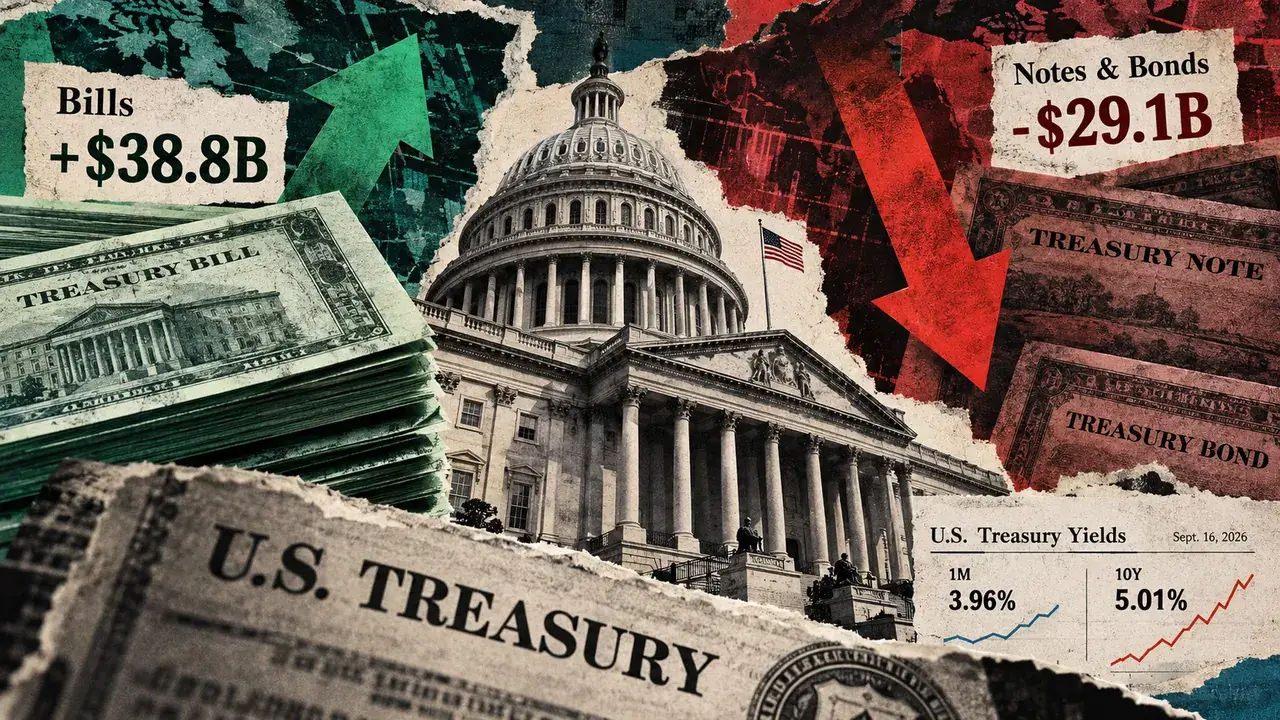
Foreign investors returned to short‑term U.S. Treasury bills in July 2026, but private demand for longer‑dated Treasury notes and bonds remained weak. The split in Treasury International Capital (TIC) data highlights a potential headwind for Bitcoin, whose price can be sensitive to long‑term yield levels.
July Treasury Flows: Bills vs. Longer‑Term Debt
According to the Treasury Department’s July release, foreign residents bought a net $38.8 bn of Treasury bills after selling $29 bn in June. The private‑sector component of this activity was stark:
- Private foreign investors purchased $45 bn of bills.
- They sold $29.1 bn of Treasury notes and bonds (2‑ to 30‑year maturities).
In contrast, foreign official institutions sold $6.3 bn of bills and bought $25.5 bn of longer‑term securities, partially offsetting the private outflow.
Impact on Long‑Term Yield Levels
Despite the bill rebound, long‑term Treasury yields stayed high. From the first to the last trading day in July, the 10‑year yield rose from 4.48 % to 4.75 %, and the 30‑year climbed from 4.97 % to 5.27 %. By mid‑September, the curve showed a 1.05‑percentage‑point spread between the one‑month (3.96 %) and 10‑year (5.01 %) rates.
Why This Matters for Bitcoin
The Federal Reserve’s financial‑conditions framework links Treasury yields to the opportunity cost of holding non‑yielding assets such as Bitcoin. Higher risk‑free rates can make Bitcoin less attractive, while tighter credit conditions can limit capital available for risk assets.
Research notes that foreign demand can influence Treasury term premiums, but a single month’s flow cannot be directly tied to specific yield moves. The key signal for Bitcoin is the persistence of elevated long‑term yields, not the short‑term bill buying.
Outlook
A broader improvement for Bitcoin would likely require private foreign investors to re‑enter the market for Treasury notes and bonds, accompanied by a sustained decline in long‑term yields. Until such a shift occurs, the current duration pressure on the Treasury market may continue to weigh on Bitcoin’s upside potential.
Source & attribution
News Source
- Publisher
- CryptoSlate
- Original date
- September 17, 2026, 12:40 PM
- Original headline
- A $29B private exodus from US bonds is threatening Bitcoin’s next big rally