Crypto news report · source clearly identified
Bitcoin dips below $80,000 after strong US jobs report
A surprise rise in August non‑farm payrolls lifted Treasury yields and the dollar, pushing Bitcoin under $80,000 while Ethereum stayed near $2,454.
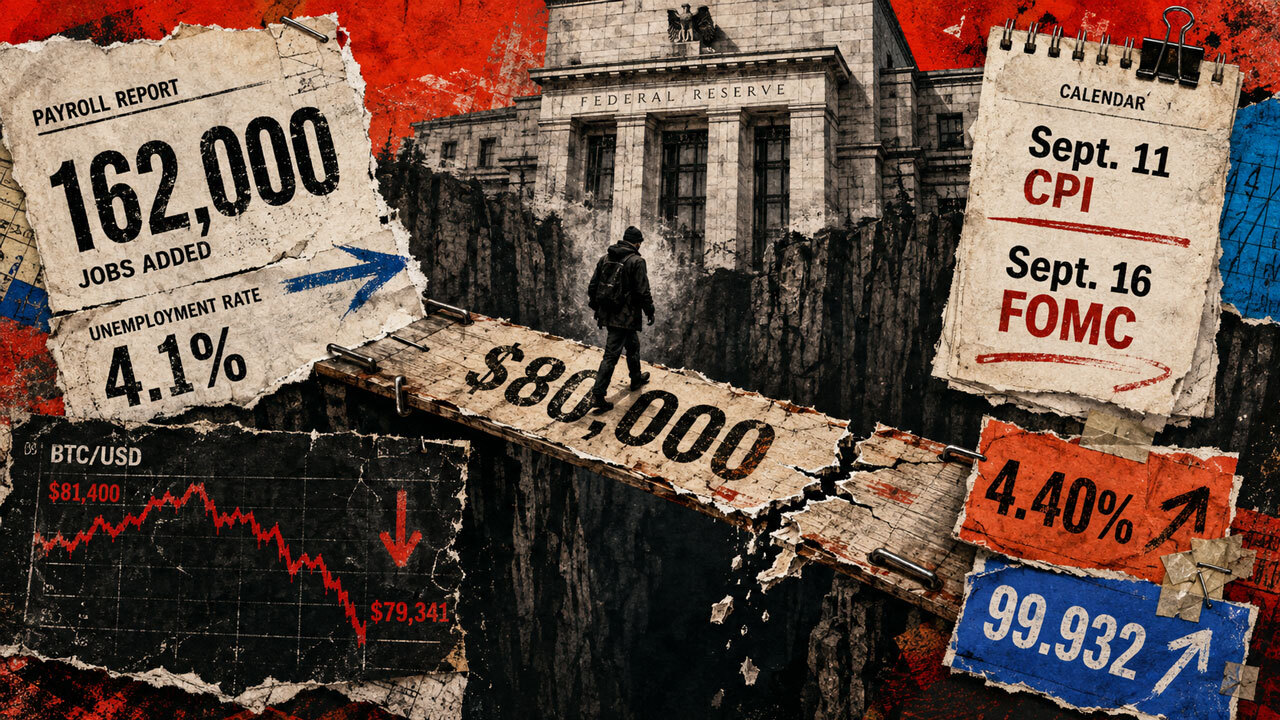
Bitcoin fell below the $80,000 mark on Friday following a much stronger‑than‑expected U.S. jobs report that revived expectations of tighter Federal Reserve policy.
Jobs data sparks market reaction
The Bureau of Labor Statistics reported that non‑farm payrolls increased by 162,000 in August, far above the Reuters consensus of 56,000. Unemployment remained at 4.1%, and earlier payroll estimates were revised up by 55,000.
Immediate impact on crypto prices
Bitcoin dropped about 2% in the minutes after the release, slipping below $80,000 before recovering to around $79,570, a 0.83% gain over the previous 24 hours. Ethereum held near $2,454, up 1.41% in the same period, indicating that the sell‑off mainly trimmed earlier gains rather than triggering a broader collapse.
Broader financial market context
The payroll surprise lifted the implied probability of a September quarter‑point Fed rate hike to 59% (up from 52%). The two‑year Treasury yield rose 7.6 basis points, while the ten‑year and 30‑year yields added 3.2 and 1.0 basis points respectively. The dollar index gained roughly 0.3% to 99.3.
Higher yields increase the return on dollar‑denominated assets, and a stronger dollar tightens conditions for assets priced in the currency, creating headwinds for Bitcoin. Gold fell between 1.7% and 2.2% as higher rate expectations reduced its appeal.
Equity and commodity markets
S&P 500 futures turned negative, down 0.22%, while Nasdaq 100 futures stayed slightly positive (+0.07%). Average hourly earnings rose 0.3% month‑over‑month and 3.1% year‑over‑year. Brent crude hovered near $95, down only marginally despite the jobs data.
Source & attribution
News Source
- Publisher
- CryptoSlate
- Original date
- September 4, 2026, 4:10 PM
- Original headline
- Bitcoin falls below $80,000 as hot US payrolls revive Fed hike risk