Crypto news report · source clearly identified
How Eight Major Blockchains Reach Consensus
Every blockchain eventually hits a hard wall: thousands of independent computers have to settle on one history without a central referee deciding which version wins. That process is called a consensus algorithm, and the design determines who can add transactions, how rival versions of the ledger get settled, and when a payment is effectively locked.
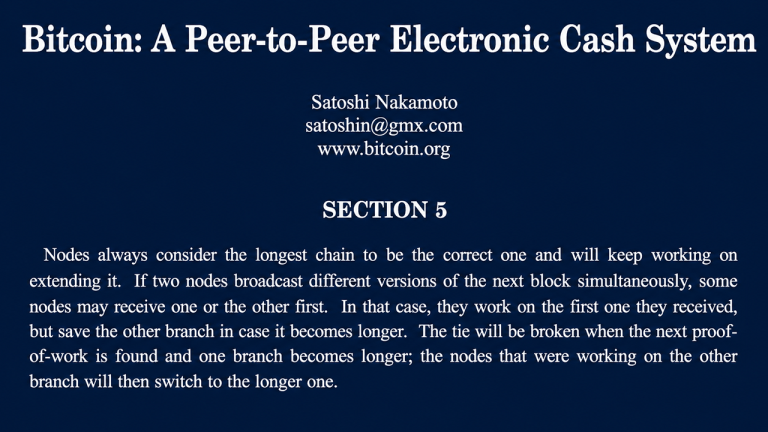
Blockchains rely on consensus algorithms to decide which version of the ledger is accepted when nodes disagree. The choice of algorithm shapes who can add blocks, how forks are resolved, and when transactions become final.
Nakamoto Consensus – Bitcoin’s Original Model
Bitcoin uses a stack of rules often called Nakamoto Consensus. Miners compete in a proof‑of‑work (PoW) lottery, and the chain with the greatest cumulative computational work is considered valid. Blocks are produced roughly every ten minutes, and finality is probabilistic – each additional block makes a reversal increasingly difficult.
Proof‑of‑Stake and Hybrid Designs
Ethereum
After the Merge, Ethereum replaced PoW with a proof‑of‑stake (PoS) system called Gasper. Validators stake ETH to propose blocks and vote on the chain. The LMD‑GHOST rule weighs votes by stake, while Casper FFG adds checkpoint finality, achieving finality in about 12.8 minutes.
BNB Smart Chain
BNB Smart Chain runs a Proof‑of‑Staked‑Authority model with 45 elected validators. The January 2026 Fermi upgrade reduced block time to 450 ms, and finality is achieved through BLS‑based validator votes.
Solana
Solana combines a cryptographic clock (Proof‑of‑History) with a stake‑weighted Tower BFT. Leaders are scheduled in advance, and a block finalizes after 31 descendants, giving roughly 12.8‑second finality at a 350‑ms slot cadence.
Tron
Tron uses delegated PoS with 27 elected Super Representatives rotating in three‑second slots. Finality requires approval from at least 19 representatives, typically reaching finality about a minute behind the head.
Trust‑Based and Unique Approaches
XRP Ledger
The XRP Ledger relies on Unique Node Lists (UNLs) of trusted validators. Consensus is reached when 80 % of the UNL agrees, resulting in settlement times of four to five seconds.
Dogecoin
Dogecoin follows Nakamoto Consensus but uses Scrypt PoW and a DigiShield difficulty adjustment after every block. It also supports merged mining with Litecoin.
Zcash
Zcash employs Equihash PoW with a block time of 75 seconds and per‑block difficulty adjustments, maintaining the same probabilistic finality as Bitcoin.
Choosing Trust Assumptions
Each network balances speed, security, and trust assumptions differently. Proof‑of‑work relies on computational power, PoS on economic stake, and other designs on elected or trusted validator groups. Faster finality benefits payments and applications, but security ultimately depends on what an attacker must control to rewrite history.
Source & attribution
News Source
- Publisher
- Bitcoin.com News
- Original date
- August 24, 2026, 4:30 AM
- Original headline
- Bitcoin to Solana: How 8 Crypto Networks Reach Consensus