Crypto news report · source clearly identified
Ethereum and Base Diverge on Next‑Gen Wallet Standards
Ethereum’s EIP‑8141 Frame Transactions and Base’s EIP‑8130 account‑abstraction proposals failed to reach a common standard, highlighting growing technical divergence among L2 networks.
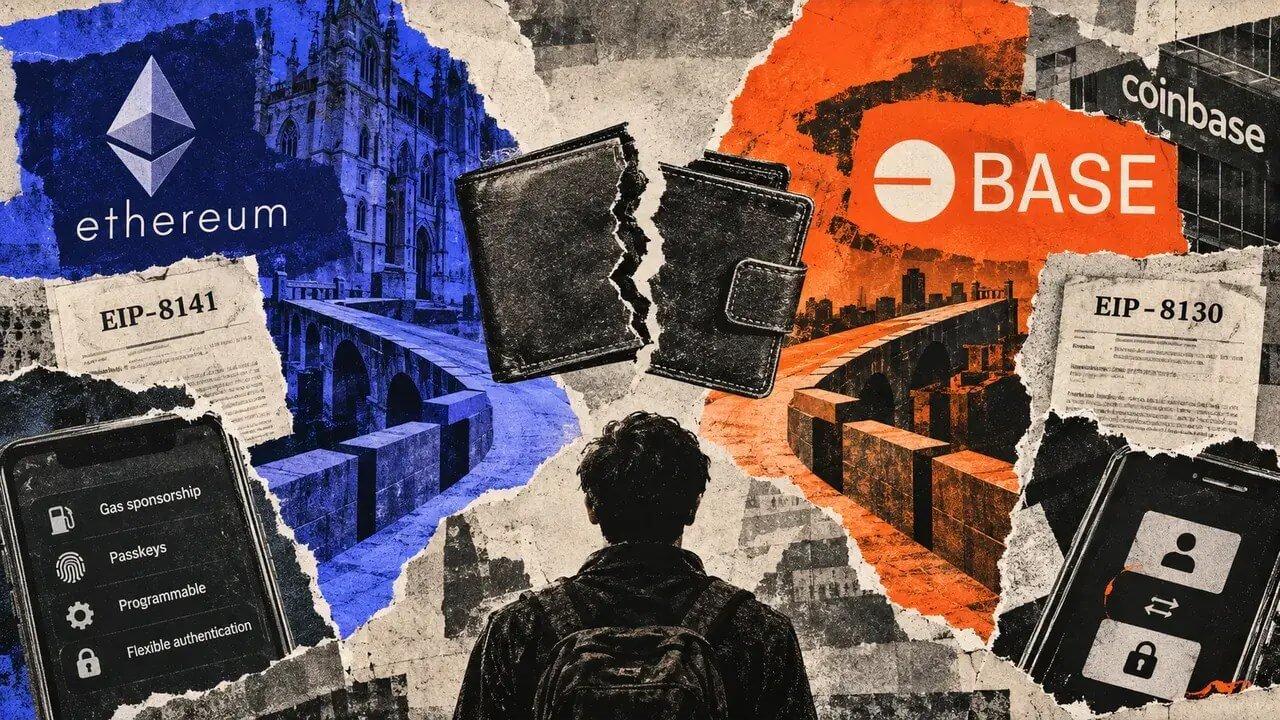
Ethereum and Coinbase‑backed layer‑2 network Base have ended collaborative talks on a shared account‑abstraction standard for future crypto wallets. The split reveals differing technical priorities as L2s mature.
Failed Collaboration on Wallet Standards
Ethlabs researcher Derek Chiang reported that discussions between developers of Ethereum’s EIP‑8141 Frame Transactions and Base’s EIP‑8130 broke down last week. Both proposals aim to make wallets more programmable, supporting gas sponsorship, passkeys and flexible authentication, but could not reconcile the chains’ distinct requirements.
Key Differences Between the Proposals
- EIP‑8141 (Ethereum): Introduces Frame Transactions that separate validation, execution and gas payment, allowing accounts to be defined by code and supporting key rotation and post‑quantum signatures.
- EIP‑8130 (Base): Requires transactions to declare their authenticator, enabling nodes to validate before execution and allowing Base to restrict native transaction paths to approved authenticators.
Implications for Wallet Developers
The divergence may force wallet developers to support multiple transaction architectures across networks that previously shared a common experience. While ERC‑4337 remains an alternative transport, additional compatibility work could shift from protocol level to application level.
Broader Impact on Ethereum’s L2 Ecosystem
Ethereum core developer Matt Garnett noted that market pressure drives L2s to ship features faster than Ethereum L1, leading to inevitable incompatibilities. Crypto lawyer Gabriel Shapiro argued that the split challenges the narrative that L2 growth automatically benefits Ethereum, emphasizing that L2s capture sequencing economics and make independent product decisions.
Future Outlook
Both Ethereum and Base continue to pursue their respective designs. Ethereum prioritizes censorship resistance, open‑source software, privacy and security (the “CROPS” criteria), while Base focuses on high‑throughput scalability and clear authentication rules. The outcome will shape how interoperable wallet solutions can remain as the ecosystem diversifies.
Source & attribution
News Source
- Publisher
- CryptoSlate
- Original date
- September 15, 2026, 3:20 AM
- Original headline
- Coinbase-backed Base just exposed the uncomfortable truth about Ethereum’s L2s