Crypto news report · source clearly identified
El Salvador added 1,540 Bitcoin, but the IMF says Bukele’s government didn’t pay for them
A new IMF disclosure says no public resources funded the accumulation since its first review, exposing a gap in the country's one-Bitcoin-a-day message.
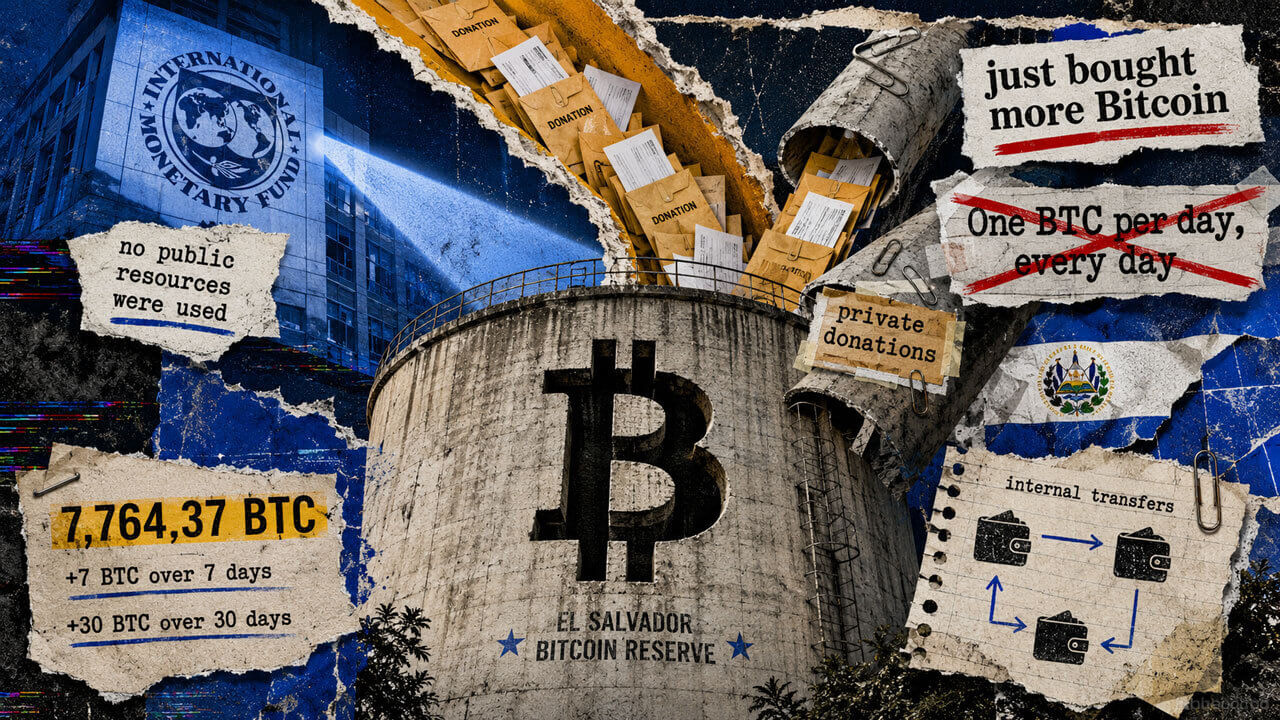
The International Monetary Fund (IMF) has clarified that the recent growth in El Salvador’s Bitcoin reserve stems from private donations rather than new government spending.
IMF findings on the reserve increase
In its latest review of the country’s loan program, the IMF examined documents supplied by El Salvador and concluded that the 1,540 BTC added since the previous review were accounted for as private contributions. The agency stated that no public resources were used for these purchases and does not expect further accumulation beyond the documented donations.
Previous accounting of Bitcoin holdings
Earlier IMF reviews noted that changes in the Strategic Bitcoin Reserve often reflected internal transfers among government‑controlled wallets, with minor fluctuations linked to Bitcoin‑denominated deposits held through the Chivo e‑wallet. The Fund also highlighted that the government has “substantially unwound” its stake in Chivo, transferring majority ownership and operational control to a private operator while retaining a minority stake and custodial duties.
Government messaging versus IMF assessment
Despite the IMF’s assessment, El Salvador continues to promote its Bitcoin acquisition strategy. The National Bitcoin Office recently announced a new purchase, reiterating the “one BTC per day, every day” slogan. President Nayib Bukele maintains a pro‑Bitcoin stance, and the country has expanded Bitcoin education initiatives as part of its long‑term economic plan.
Changes to the treasury structure
Last year, El Salvador restructured its Bitcoin treasury, moving from a single reused wallet to multiple public addresses. Officials said the shift follows digital‑asset security best practices and mitigates exposure to quantum‑computing threats. While the new structure improves transparency of total balances, it does not differentiate between BTC acquired with public funds and that received as private donations.
Unresolved questions
The reserve now holds roughly 7,764 BTC, up from about 6,224 BTC at the end of June 2025. The IMF’s analysis suggests that the recent increase was not financed by taxpayers, raising questions about whether the “one BTC per day” narrative still reflects government‑funded purchases or merely the rate of incoming donations.
Source & attribution
News Source
- Publisher
- CryptoSlate
- Original date
- September 4, 2026, 11:15 PM
- Original headline
- El Salvador added 1,540 Bitcoin, but the IMF says Bukele’s government didn’t pay for them