Crypto news report · source clearly identified
Ethereum and Solana Process Trillions in Stablecoin Volume, Yet Native Token Demand Remains Unclear
Stablecoin transactions on Ethereum and Solana are increasingly routed through paymasters and sponsors, allowing users to operate without holding ETH or SOL, but the networks still require native‑token fees, raising questions about long‑term demand for those assets.
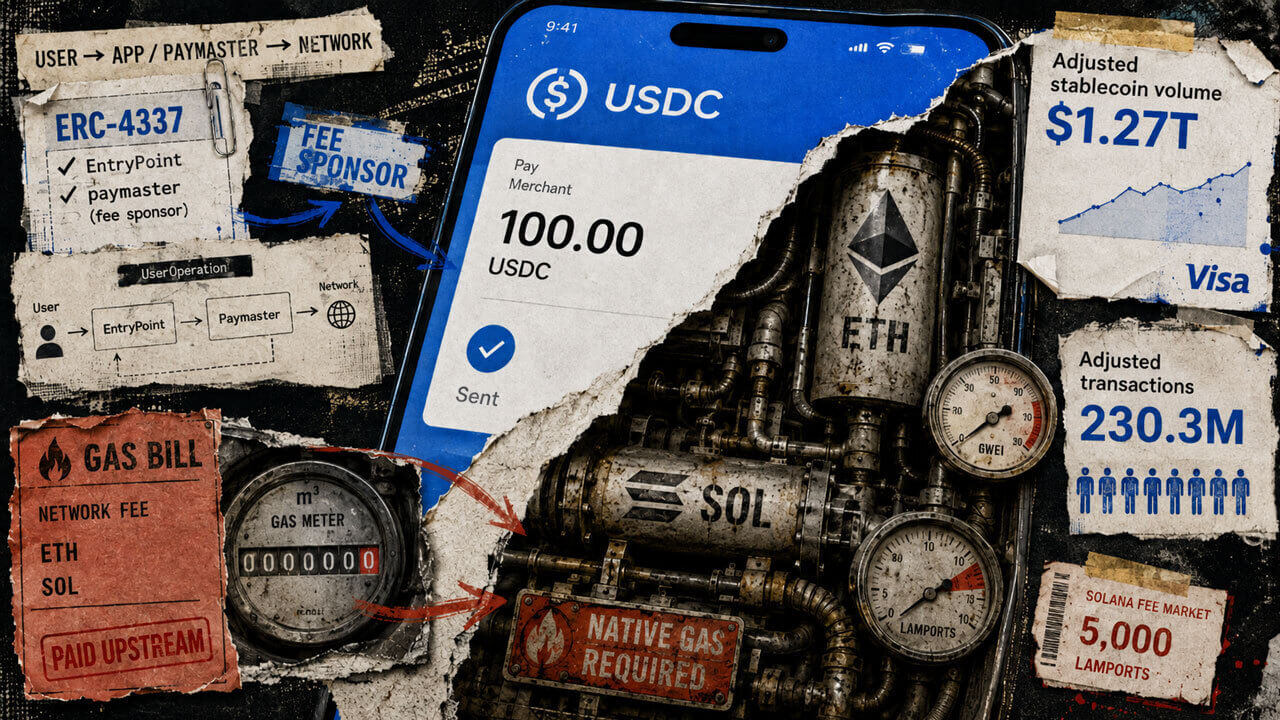
Stablecoin activity on Ethereum and Solana now exceeds a trillion dollars in monthly volume, but the way fees are paid is shifting away from end‑users holding native tokens. Paymasters, sponsors and infrastructure providers can absorb gas costs, letting users send and receive USDC without ever seeing an ETH or SOL balance.
Stablecoin volume on the chains
Visa’s On‑chain Analytics dashboard reported roughly $1.3 trillion in adjusted stablecoin volume and 230.3 million adjusted transactions for a 30‑day window ending August 27. The unadjusted figures for the same period were about $6.8 trillion and 1.75 billion transactions. Adjustments filter out low‑value or high‑frequency addresses and count only the largest stablecoin transfer per transaction.
How “gasless” transactions work
Both Ethereum and Solana still require fees in their native assets (ETH and SOL). The difference is who supplies those fees:
- Ethereum (ERC‑4337): A paymaster deposits ETH at an EntryPoint contract. When a user initiates a stablecoin transfer, the paymaster covers the gas and later recovers the cost in fiat, USDC or other tokens.
- Solana: The transaction fee (5,000 lamports per signature) is paid in SOL by a designated sponsor. Services such as Kora can sponsor the fee or accept payment in an SPL token like USDC, keeping the user’s experience fully dollar‑denominated.
Impact on native‑token demand
Because the fee burden shifts to sponsors, end‑users no longer need to maintain a balance of ETH or SOL. However, the networks still collect native fees, which are burned or paid to validators. The overall demand for ETH and SOL therefore depends on the aggregate fee volume funded by paymasters and sponsors, not on the number of individual users holding the tokens.
Open questions
While several providers (e.g., Coinbase, Alchemy, Kora) demonstrate the fee‑abstraction model, the broader market impact remains unmeasured. Determining whether a few large sponsors dominate gas consumption would require on‑chain analysis of payer addresses, which is not yet available.
Source & attribution
News Source
- Publisher
- CryptoSlate
- Original date
- August 28, 2026, 3:20 AM
- Original headline
- Ethereum and Solana are hosting trillions in dollar volume, yet their native tokens risk losing direct consumer demand