Crypto news report · source clearly identified
Stablecoins Boost Private Dollar Use and Treasury‑Bill Demand
Regulated dollar‑stablecoins are expanding private use of the currency and increasing demand for short‑term U.S. Treasury bills, while official reserve allocations remain driven by central‑bank policy.
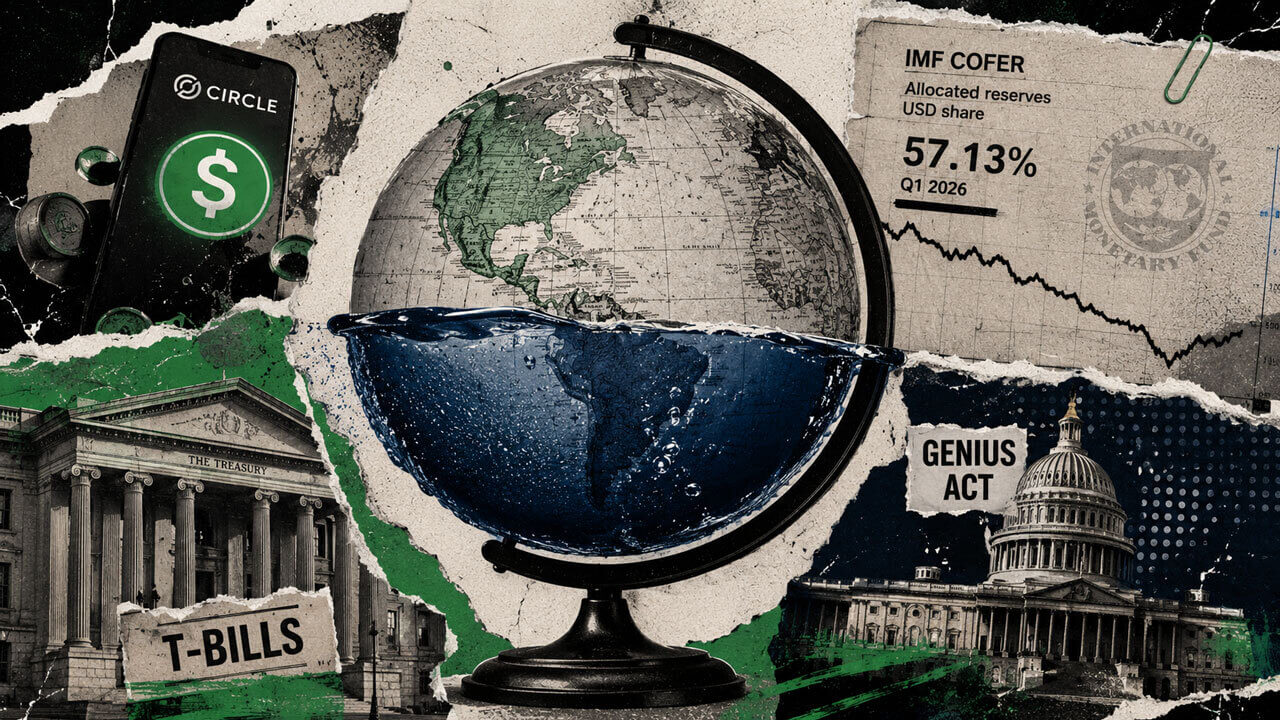
Circle President Heath Tarbert told Congress that U.S. regulation of digital‑dollar infrastructure could reinforce the network effects that support the dollar’s global role. The testimony framed stablecoin and digital‑asset legislation as a tool of dollar statecraft, separating private token markets from official reserve decisions.
Stablecoins and the official reserve mix
The International Monetary Fund’s COFER data show the dollar accounted for 57.13 % of global foreign‑exchange reserves in Q1 2026, up from 56.42 % in Q4 2025. About half of the quarterly increase reflects exchange‑rate valuation effects, not new reserve purchases. Stablecoin market capitalisation, measured separately, is not part of official reserve reporting.
Regulatory framework shaping private dollar tokens
The GENIUS Act, enacted July 2025, requires stablecoin issuers to hold one‑to‑one reserves, allow redemption at par, disclose holdings, and comply with financial‑crime rules. Effective dates are expected in early 2027, with broader restrictions on unlicensed issuers beginning July 2028. The CLARITY proposal, moving through Congress, would allocate oversight of digital‑asset intermediaries between the SEC and CFTC, potentially easing market operations for regulated dollar tokens.
Impact on Treasury‑bill markets
Stablecoin issuers need liquid assets for redemptions, and Treasury bills are a primary source. A Treasury Borrowing Advisory Committee analysis (data through September 2025) found that Treasury bills comprised 53 % of the assets held by major issuers such as Tether and Circle, with holdings up $70 billion since 2022. Despite this growth, stablecoin issuers own less than 1 % of all outstanding Treasury securities, meaning their demand influences the bill market only at the margin.
Risks and broader implications
Federal Reserve staff note that complex intermediation and tighter links between stablecoins and traditional finance could increase opacity and contagion risk. BIS researchers warn that widespread dollar‑stablecoin adoption might accelerate private currency substitution, weaken domestic monetary‑policy traction, and channel emerging‑market savings into U.S. Treasury bills, potentially transmitting stress to local financial systems.
Overall, regulated stablecoins expand the private reach of the dollar and create modest demand for short‑dated government debt, while official reserve allocations continue to depend on broader economic credibility and policy considerations.
Source & attribution
News Source
- Publisher
- CryptoSlate
- Original date
- September 3, 2026, 2:30 AM
- Original headline
- How stablecoins are quietly becoming the Fed’s debt buyer of last resort