Crypto news report · source clearly identified
Tax‑Driven Borrowing Strategies Add Hidden Credit Risk to DeFi Lending Pools
Borrowers who use stablecoin loans against appreciated crypto to defer capital‑gains taxes create fragile loan‑to‑value dynamics that raise default risk for DeFi lending protocols such as Venus.
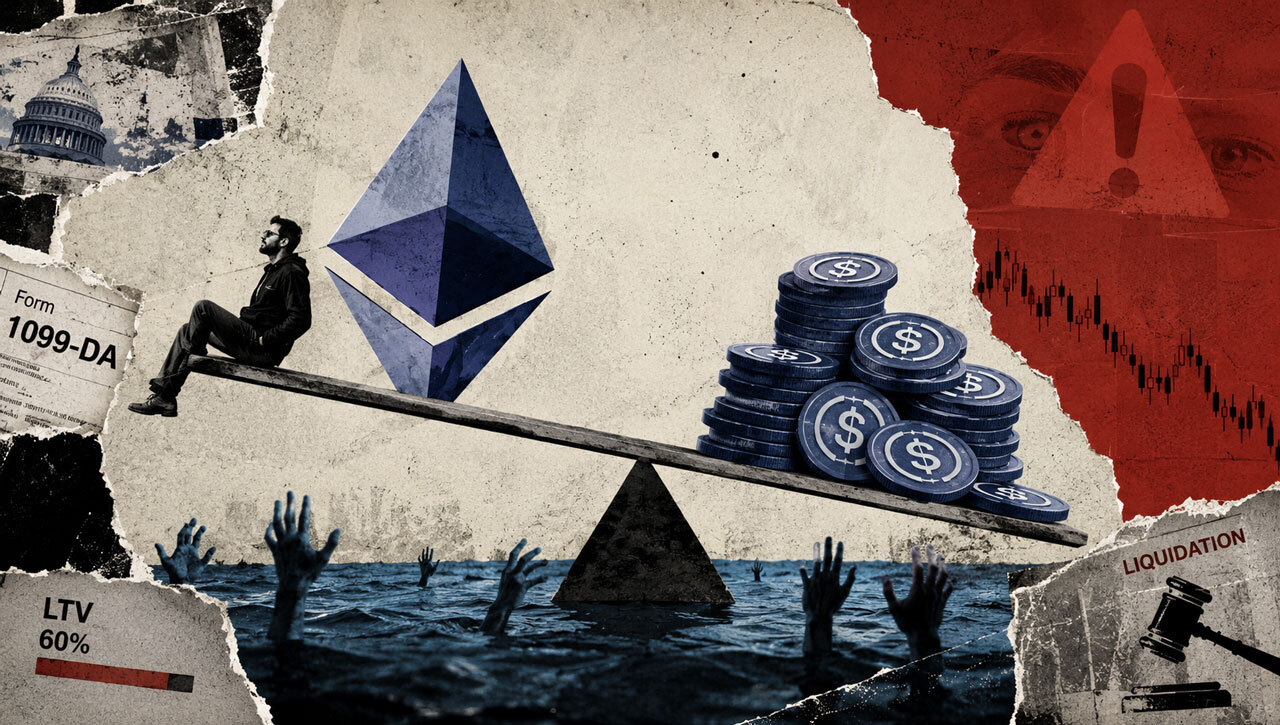
Investors can avoid realizing a capital‑gain by depositing their full crypto holdings into a DeFi lending protocol, using the assets as collateral, and borrowing a stablecoin. The loan is not a taxable event, but the collateral’s market value can fall, pushing the loan‑to‑value (LTV) ratio toward liquidation thresholds.
How the strategy works
A holder who bought ETH at $1,000 and sees it rise to $4,000 can borrow $1,000 in a dollar‑pegged stablecoin. The loan keeps the ETH exposure intact while providing cash without a taxable sale. However, the debt starts at 25 % of the collateral value; a price drop to $2,000 doubles the LTV to 50 % and interest accrual pushes it higher. If the LTV exceeds the protocol’s limit (60 % on Venus), the smart contract allows liquidators to repay part of the debt and claim the ETH at a discount.
Empirical findings from Venus
Researchers examined the Venus protocol on BNB Smart Chain from November 2020 to July 2022. Their dataset includes roughly 13 million transactions and 1.36 million daily borrower observations. About 3 % of borrowers were classified as defaulting when their loan stayed above the 60 % LTV limit for at least seven days without further activity. The total defaulted debt measured $133.34 million, representing accumulated daily exposure rather than a single loss event.
Tax reporting expectations and borrower behavior
The study used the U.S. Infrastructure Investment and Jobs Act (November 2021) as an exogenous shock that increased expectations of future IRS reporting for digital‑asset trades. By inferring U.S.‑linked wallets through activity patterns, the authors found that after the law’s announcement, U.S. borrowers were 24.5 % less likely to trade assets and 23 % less likely to trade stablecoins. This reduced liquidity was strongest for borrowers with larger unrealized gains and higher LTV ratios.
Impact on default risk
Using an instrumental‑variable approach, the researchers estimated that a 1 % increase in tax‑induced illiquidity raised defaulted accounts by 11.2 % and defaulted loan value by 39.6 %. A one‑standard‑deviation rise in illiquidity corresponded to roughly $350 more defaulted debt per borrower, about 2.7 times the baseline exposure.
Implications for DeFi protocols
Smart contracts can monitor collateral price, debt balance, interest, and liquidation thresholds, but they cannot see the borrower’s original purchase price or tax motive. Consequently, two identical loan positions may carry very different risk profiles. Over‑collateralization protects against modest price moves, yet borrowers motivated to avoid taxable sales may keep debt open longer, increasing the chance of liquidation failure and exposing pool reserves, token holders, or liquidity providers to loss.
Broader considerations
The findings highlight a borrower‑selection problem: tax‑driven strategies concentrate risk among users whose behavior the protocol cannot measure. While Venus’s specific parameters (e.g., 60 % LTV limit, 10 : 6 collateral‑to‑debt ratio) shape the outcomes, similar dynamics could arise in other over‑collateralized lending platforms.
Source & attribution
News Source
- Publisher
- CryptoSlate
- Original date
- September 5, 2026, 12:00 PM
- Original headline
- How the “buy, borrow, die” tax trade is quietly loading DeFi pools with hidden credit risk