Crypto news report · source clearly identified
Tokenized Stocks: How They Differ From Traditional Shares
Tokenized stocks promise cheaper trading and broader access, but they often lack the shareholder rights of ordinary shares. Understanding the legal and practical differences is essential for investors.
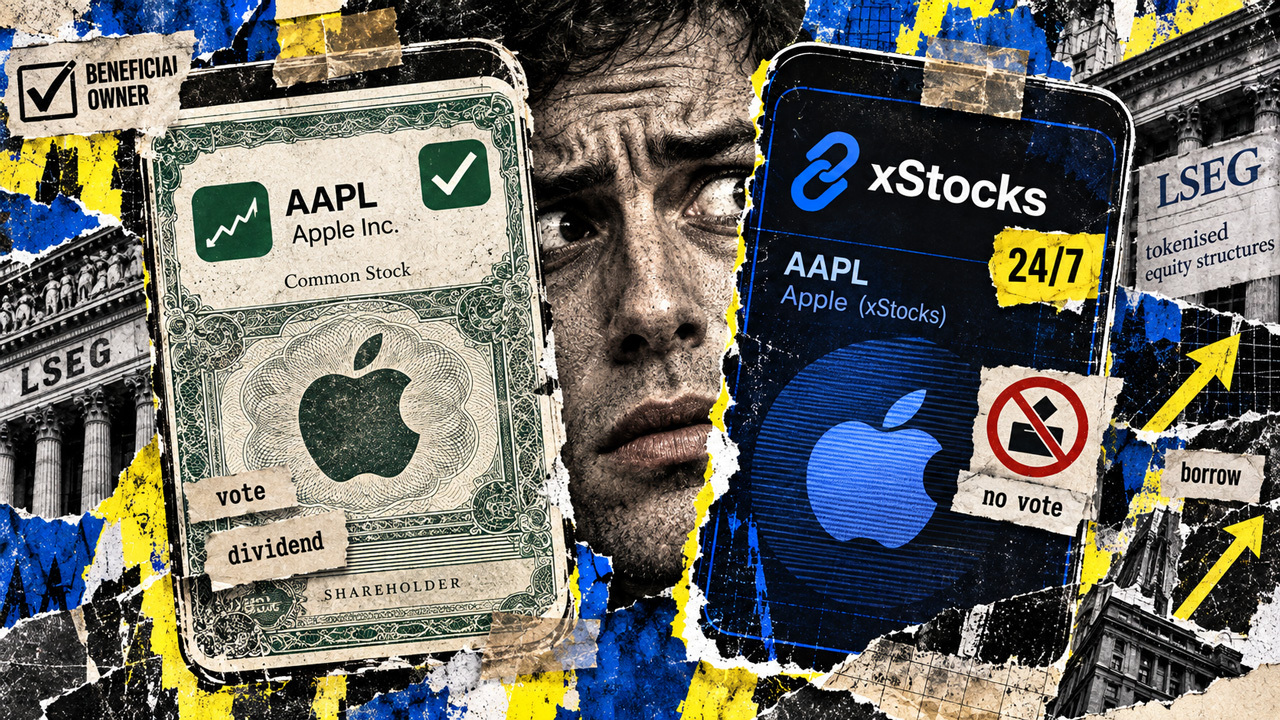
Tokenized stocks aim to make equity exposure cheaper and more accessible, yet they can represent a very different legal relationship than owning a traditional share. Two investors may see the same company ticker and price in their apps, but one holds actual shares while the other holds a blockchain token that tracks the share price.
What Traditional Shares Provide
Common shareholders own a portion of the issuing company, receive dividends, and can vote on corporate matters. Ownership is usually recorded through brokers as beneficial owners, with the SEC distinguishing this from direct registration.
How Tokenized Shares Work
Tokenization records ownership on a blockchain. When a company itself issues a token that represents its own shares, the token can preserve the same rights as the underlying share, provided the legal and regulatory framework supports it.
Third‑Party Issued Stock‑Linked Tokens
Some platforms create tokens that are backed by a pool of underlying equities held by a custodian. These tokens give exposure to the price movement but typically do not convey voting rights or direct dividend payments. For example, Kraken’s xStocks tokens adjust the holder’s effective balance to reflect dividend reinvestment rather than paying cash dividends.
Risks and Considerations
- Rights vs. Exposure: Token holders may lack shareholder voting rights and may receive economic benefits only through contract‑specified mechanisms.
- Legal Claims: In the event of issuer insolvency, token holders’ recovery depends on custody and collateral arrangements, not on direct claims against the underlying company.
- Liquidity and Pricing: Tokens can trade outside regular market hours, potentially causing price divergence from the underlying stock.
- Borrowing and Leverage: Tokens can be used as collateral, amplifying exposure and risk, as highlighted by the Financial Stability Board’s 2024 assessment.
Regulatory Landscape
The London Stock Exchange is exploring blockchain‑based share structures and plans to list xStocks on its LSE 24 venue by 2027, subject to regulatory approval. Such initiatives illustrate the split between preserving shareholder rights and creating separate tradable products.
Conclusion
Tokenized stocks can lower transaction costs and broaden market access, but investors must understand that the token may represent only price exposure, not full shareholder ownership. The value of these products depends on the rights and protections embedded in their contracts.
Source & attribution
News Source
- Publisher
- CryptoSlate
- Original date
- September 9, 2026, 7:35 PM
- Original headline
- It looks like a stock and trades like a stock, but it isn’t actually a stock – what is it?