Crypto news report · source clearly identified
Michael Saylor Calls for a ‘Bitcoin Reformation’ Beyond Orthodoxy
Michael Saylor is calling for Bitcoin to move beyond founder worship, mandatory self-custody, and hostility toward institutions. His “Bitcoin Reformation” envisions the asset operating across banks, corporations, securities, governments, and machines.
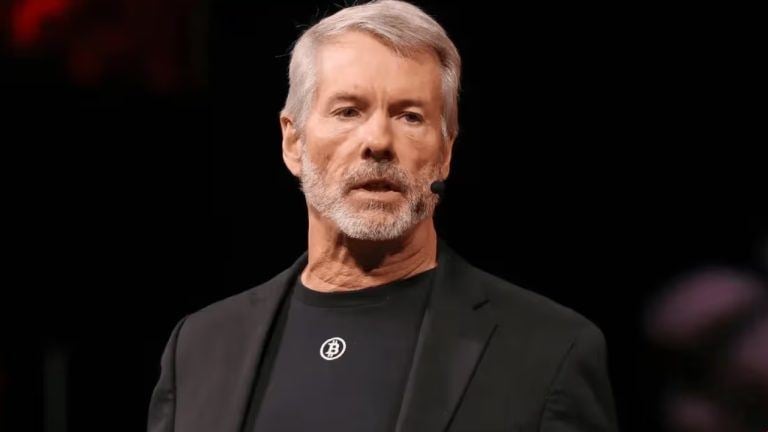
Strategy Inc. Executive Chairman Michael Saylor argues that Bitcoin has outgrown the doctrinal stance that treats Satoshi Nakamoto as an oracle and self‑custody as a universal duty. In a 14‑section essay released on August 24, 2026, he proposes a “Bitcoin Reformation” that integrates the cryptocurrency into banks, insurers, exchanges, corporations and governments while preserving its fixed supply and open participation.
Reframing Bitcoin’s Role
Saylor describes Bitcoin’s evolution from peer‑to‑peer electronic cash to digital gold and now to “digital capital” that can underpin new forms of credit, equity, money and economic organization. He emphasizes that Bitcoin does not need to replace fiat currencies for everyday transactions; instead, it can serve as scarce, non‑sovereign capital alongside sovereign money.
Self‑Custody as a Choice
The essay stresses that self‑custody should remain a right, not a purity test. While holding private keys offers direct ownership, Saylor notes that institutional custody can mitigate operational errors, key‑person risk and physical‑security threats. He points to the SEC‑approved spot Bitcoin exchange‑traded product (January 2024) as an example of price exposure without private‑key management.
Institutional Participation
Saylor maps eight layers—digital capital, equity, credit, debt, currency, money, derivatives and machine capital—onto Bitcoin’s base protocol, arguing that institutional involvement can reach users who never hold private keys. He warns that rejecting integration with banks and capital markets would limit Bitcoin’s benefits for the majority of the world.
Governance Lessons from BIP‑110
The closure of BIP‑110 in early August 2026 illustrated that Bitcoin’s rule‑making depends on economic adoption rather than ideological authority. Saylor notes that miners, nodes, exchanges, custodians and users ultimately decide which proposals gain traction.
Key Principles
The essay concludes with twelve principles, ranging from protocol minimalism and economic maximalism to inclusion as a security model and the notion that sovereignty is the power to choose, verify and exit. Saylor ends with a rejection of cultural gatekeeping, stating that “Bitcoin is for everyone.”
Source & attribution
News Source
- Publisher
- Bitcoin.com News
- Original date
- August 27, 2026, 3:05 AM
- Original headline
- Michael Saylor Calls for a ‘Bitcoin Reformation’ Beyond Orthodoxy