Crypto news report · source clearly identified
Why Bitcoin bulls shouldn’t mistake a shrinking dollar reserve share for central bank buying
The New York Fed’s Sept. 2 analysis separates currency choices from reserve-size changes, leaving sovereign Bitcoin demand unproven.
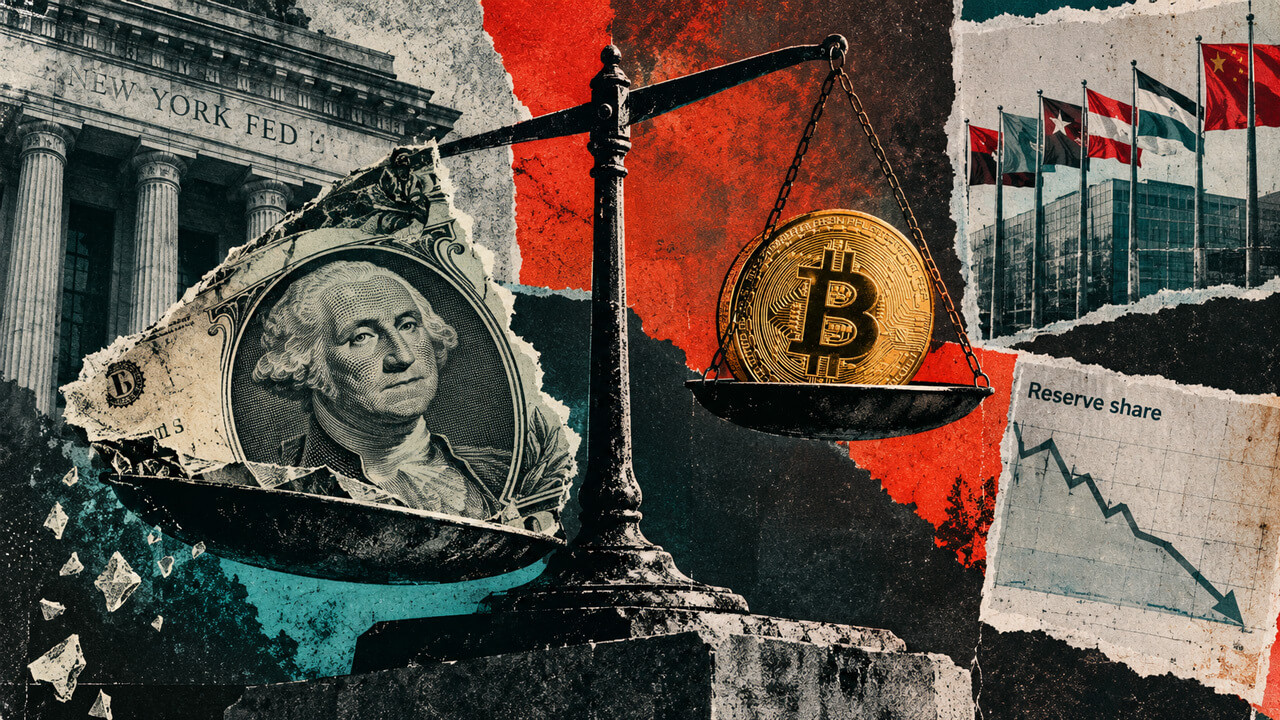
A recent analysis by researchers at the New York Federal Reserve explains why a decline in the dollar’s share of global official reserves does not indicate that central banks are buying Bitcoin.
Dollar share of reserves has fallen
Using IMF COFER data, the study finds that the dollar’s weight in official foreign‑exchange reserves dropped from 64 % at the end of 2015 to 56 % at the end of 2025. The change reflects two mechanisms:
- Preferences channel: countries adjust the currency mix of their holdings.
- Reserve‑size channel: the total size of a country’s reserves expands or contracts, altering its weight in the global average.
Concentrated portfolio moves can shift the average
When a country with a below‑average dollar allocation builds up reserves, the global dollar share can fall even though that country’s own dollar proportion rises. Switzerland illustrated this between 2015 and 2019: its reserve growth pulled the aggregate share down while its dollar allocation increased.
Data breakdown
For the 2015‑2019 period, 76 countries with complete data contributed –1.2 percentage points via preferences and –1.5 percentage points via reserve‑size changes. In the 2019‑2023 window, 62 countries added +0.3 percentage points through preferences and –0.5 percentage points through reserve‑size changes. Missing data for China, Russia, Mexico and Morocco required assumptions that estimated a –2.0 percentage‑point preferences contribution for the group.
Implications for Bitcoin demand
The Fed’s Staff Report 1087 (March 2024, revised February 2026) separates reserves needed for liquidity—from trade payments, foreign‑currency debt, and stabilization—from any surplus that could be used for investment. The report models the investment portion using measures such as short‑term external debt or three months of imports.
Even if some sovereigns diversify beyond liquidity needs, the reserve‑share statistics do not reveal the destination of those diversified assets. The analysis does not measure Bitcoin purchases, nor does it estimate any price impact.
Actual central‑bank Bitcoin activity
The only documented sovereign Bitcoin purchase is the Czech National Bank’s $1 million digital‑asset test portfolio announced on 13 Nov 2025. The portfolio, which also includes a dollar‑stablecoin and a tokenized deposit, was explicitly stated to be outside the bank’s official reserves.
What is needed to confirm sovereign Bitcoin demand?
Evidence must show a disclosed allocation, the source of funding, and executed purchases, with a clear distinction between holdings inside official reserves and assets held elsewhere. A declining dollar share alone provides none of this information.
Source & attribution
News Source
- Publisher
- CryptoSlate
- Original date
- September 8, 2026, 10:20 PM
- Original headline
- Why Bitcoin bulls shouldn’t mistake a shrinking dollar reserve share for central bank buying