Crypto news report · source clearly identified
Bitcoin’s 63% One‑Year HODL Share Signals Aging, Not New Bull Power
Bitcoin’s one‑year HODL wave rose to 63.3% on Sept. 18, but the shift reflects coins aging into older brackets rather than fresh buying pressure.
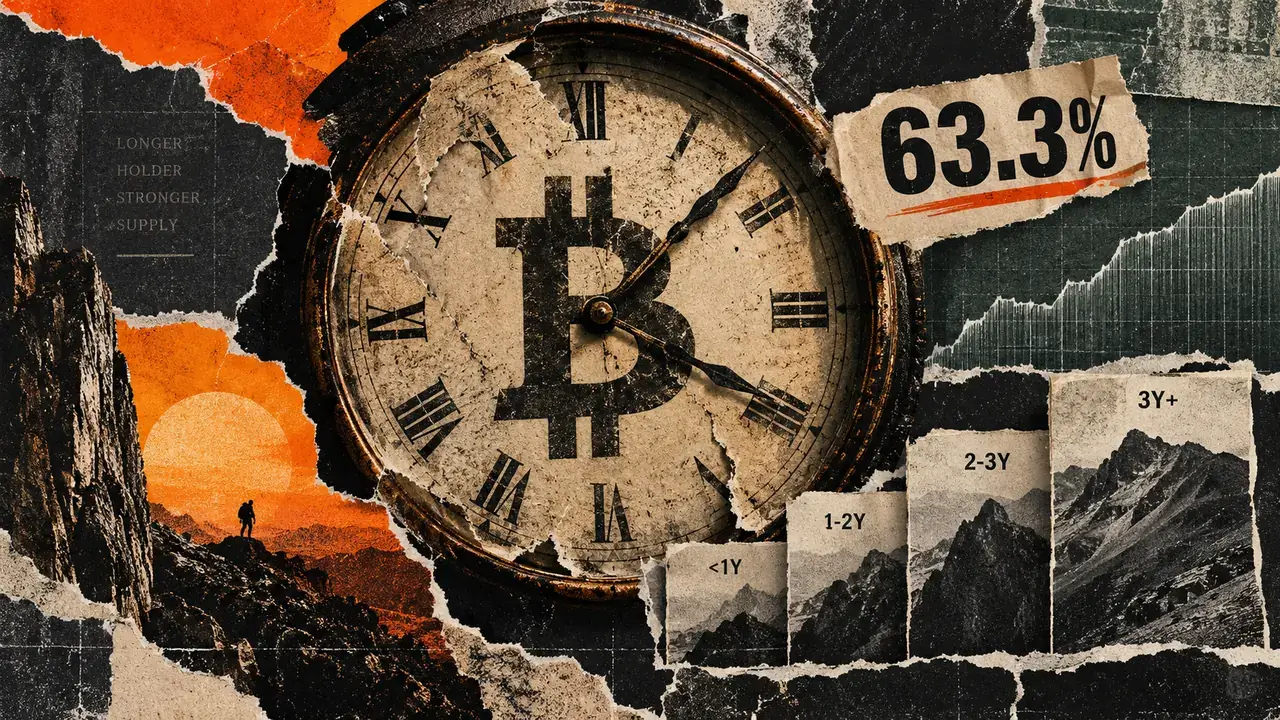
Bitcoin’s share of supply that has not moved for at least one year increased to 63.3% on Sept. 18, up 0.98 percentage points from the previous month. While the rise suggests a larger portion of Bitcoin is being held longer, the data does not confirm new demand or market tightening.
What the HODL‑wave data shows
HODL waves group unspent transaction outputs (UTXOs) by the time since their last on‑chain movement. Between Aug. 18 and Sept. 18:
- The one‑year‑old cohort grew from 62.32% to 63.3%.
- The one‑to‑two‑year cohort rose from 13.52% to 14.57%.
- The six‑to‑twelve‑month cohort fell from 19.10% to 17.53%.
- Coins moved within the last month dropped from 7.30% to 7.03%.
Why the increase is not a bullish signal
Coins simply age into older brackets when they remain unmoved; they do not need to be bought or held deliberately. Movement resets the age clock, but a transfer between wallets owned by the same entity can make an output appear younger without changing ownership. Lost coins can also sit in the oldest bands without reflecting investor intent.
What’s missing for a demand assessment
To gauge fresh accumulation, analysts need additional metrics such as:
- Entity‑adjusted balance changes.
- Exchange inflows and outflows.
- Spending behavior of long‑term holders.
Without these, the rising one‑year share should be viewed as an aging signal rather than evidence of new buying pressure.
Source & attribution
News Source
- Publisher
- CryptoSlate
- Original date
- September 20, 2026, 6:30 AM
- Original headline
- Why Bitcoin’s 63% HODL wave isn’t the mega bull signal everyone thinks it is