Crypto news report · source clearly identified
North Korea’s $30 M Bitcoin Cashout Highlights Regulatory Risks for Hyperliquid’s US Entry
An analysis linked wallets tied to North Korea’s Lazarus Group to over $30 million of Bitcoin sold on Hyperliquid, raising concerns for legacy exchanges and U.S. regulators about sanctions evasion and the structure of a potential on‑shore Hyperliquid product.
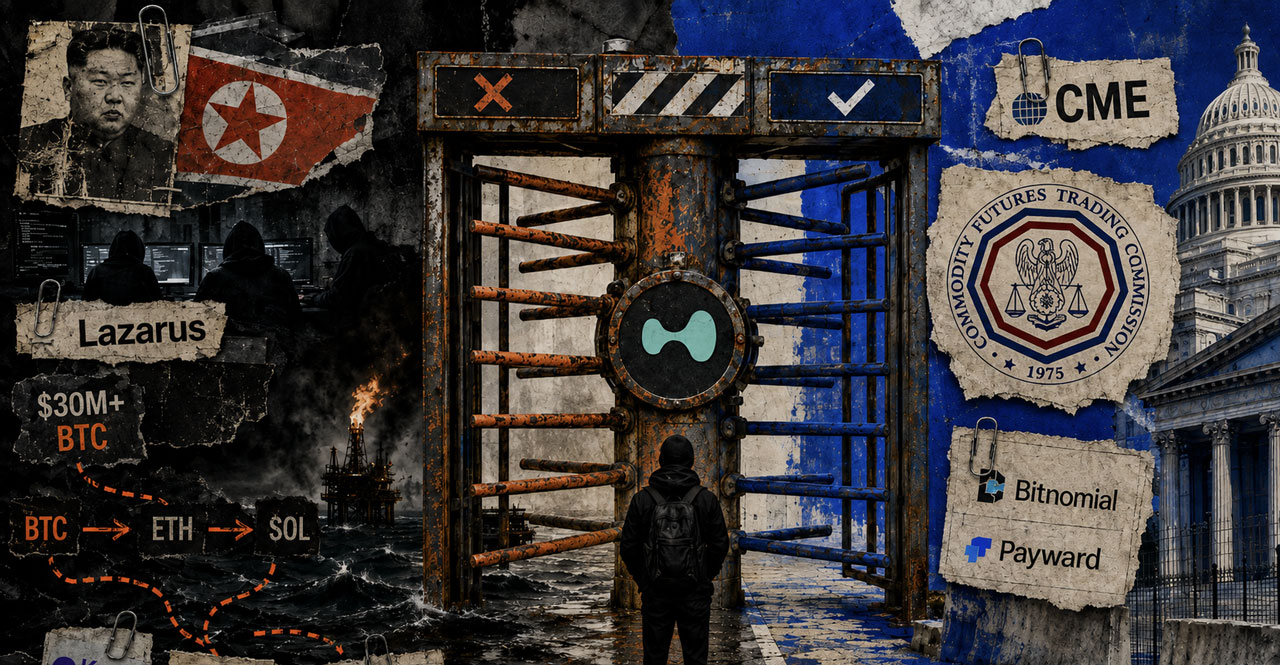
Wallets associated with North Korea’s Lazarus Group sold more than $30 million of Bitcoin on the decentralized exchange Hyperliquid over a three‑week period. The proceeds were converted to Ethereum and Solana before moving to centralized exchanges Kraken, LBank and KuCoin. The finding arrives as Hyperliquid negotiates a regulated U.S. entry through Payward’s Bitnomial platform, prompting legacy exchanges and regulators to reassess the risks of pseudonymous, always‑on markets.
Background: Early Warnings from Legacy Exchanges
In May, CME Group and ICE warned Washington that Hyperliquid’s design could enable sanctioned actors to bypass enforcement. CME later filed a lawsuit challenging the CFTC’s classification of crypto perpetual contracts, arguing they should be regulated as swaps.
North Korean Activity on Hyperliquid
Arkham’s analysis, reviewed by CoinDesk, identified the $30 million Bitcoin sell‑off and subsequent conversion to ETH and SOL. The funds were then transferred to Kraken, LBank and KuCoin, illustrating how the platform’s pseudonymous nature can be used for large‑scale sanctions evasion.
Potential U.S. On‑shore Structure
Bloomberg reported that Hyperliquid Labs is in advanced talks with Payward, the parent of Kraken, to launch a regulated U.S. venue. The plan involves using Payward’s Bitnomial exchange to offer perpetual futures tied to Hyperliquid‑based tokens, subject to CFTC approval. Details remain unclear on whether Bitnomial orders would interact with Hyperliquid’s order book or share liquidity.
Regulatory and Competitive Implications
- CME’s lawsuit focuses on the legal definition of futures versus swaps, but the Lazarus case provides a concrete sanctions‑evasion example that could influence CFTC reviews and congressional hearings.
- ICE’s stance has softened, describing Hyperliquid as a “wake‑up call” rather than a direct threat, indicating a split among legacy exchanges.
- Payward’s acquisition of Bitnomial gives it a full CFTC‑regulated derivatives stack, enabling it to list perpetual contracts for U.S. users.
Key Uncertainties
The regulatory outcome hinges on how tightly Bitnomial’s regulated infrastructure will be linked to Hyperliquid’s permissionless liquidity. If the two remain segregated, the Lazarus activity may be viewed as an offshore risk benchmark. If they share liquidity or settlement, U.S. participants could face direct exposure to sanctioned actors, raising the political cost of approval.
What Lies Ahead
The CFTC and courts have upcoming deadlines in September and October for CME’s opposition to the CFTC’s product framework. The Lazarus cashout adds a national‑security dimension to the debate, potentially shaping the future of DeFi‑related products in the United States.
Source & attribution
News Source
- Publisher
- CryptoSlate
- Original date
- September 2, 2026, 2:35 PM
- Original headline
- North Korea’s $30M crypto cashout just handed legacy finance its best weapon to kill DeFi’s US debut