Crypto news report · source clearly identified
Solana Outperforms Bitcoin on a Decentralization Metric, Yet Faces Software‑Bug Risks
ARK Invest and Glassnode’s new scorecard shows Solana needs 19 validators to reach a critical voting‑power threshold, compared with three mining pools for Bitcoin, but shared software and infrastructure expose the network to other risks.
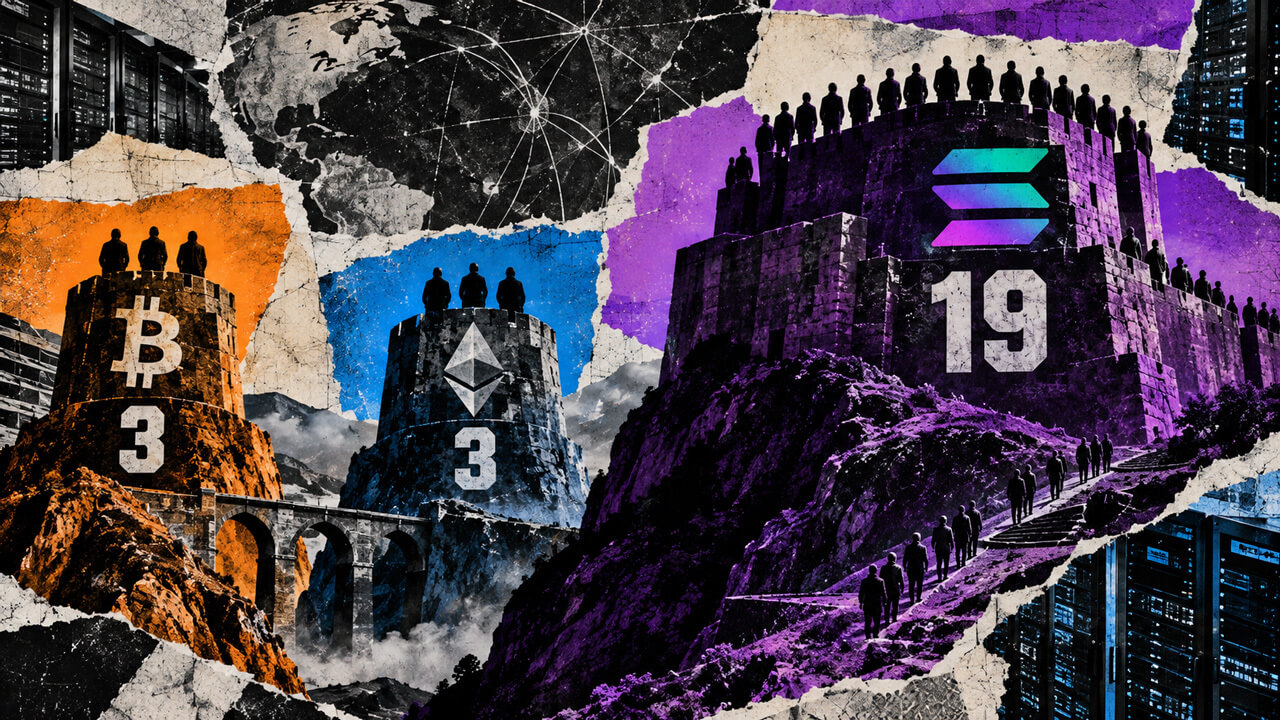
ARK Invest and Glassnode released a scorecard that measures the smallest group of block‑production entities required to cross a protocol‑relevant control threshold. The report, dated September 1, ranks Bitcoin first in a composite decentralization ranking, while Solana requires a larger coalition of validators to reach the same threshold.
Key Metric Comparison
- Bitcoin: 3 mining pools control enough hash‑rate to coordinate 59 % of block production.
- Ethereum: 3 staking entities dominate the stake‑based voting power.
- Solana: 19 validators by delegated stake can together exceed the one‑third voting‑power threshold.
Interpretation of the 3/3/19 Result
The metric, called a “critical resilience threshold,” reflects how many top entities must coordinate to influence consensus. For Bitcoin, the measure is based on hash‑rate attributed to mining pools; for Ethereum and Solana, it is based on stake delegation.
Beyond the Metric: Additional Exposure Vectors
While Solana’s higher validator count suggests broader distribution, other factors can concentrate risk:
- Infrastructure ownership – Data‑center operators, cloud platforms, and network carriers can affect many validators simultaneously.
- Software dependencies – Over 90 % of Solana stake runs on the Agave/Jito client suite, creating a shared‑code exposure.
- Exit speed – Bitcoin miners can redirect hash‑rate within seconds, whereas Ethereum validators face a rate‑limited exit process that can take weeks under stress.
Implications for Institutional Users
Institutions evaluating blockchains for settlement must consider multiple dimensions of capture risk, including:
- Concentration of voting power or hash‑rate at protocol‑specific thresholds.
- Geographic and infrastructure concentration of nodes and validators.
- Shared client software and potential for a single bug to affect large portions of the network.
- Liquidity and exit mechanisms that determine how quickly participants can withdraw resources.
Conclusion
The scorecard highlights that Solana beats Bitcoin on the specific validator‑count metric, yet its reliance on a limited set of software clients and data‑center providers introduces distinct vulnerabilities. A comprehensive decentralization assessment must weigh all exposure vectors rather than a single numeric threshold.
Source & attribution
News Source
- Publisher
- CryptoSlate
- Original date
- September 7, 2026, 7:00 PM
- Original headline
- Solana beats Bitcoin on one key metric, but a single software bug could still take down the network