Crypto news report · source clearly identified
India’s Tokenized Bond Pilot Begins with Institutional Issuances
Three institutional issuances tested atomic settlement without changing bondholder rights, while secondary trading and retail access remain for Stage II.
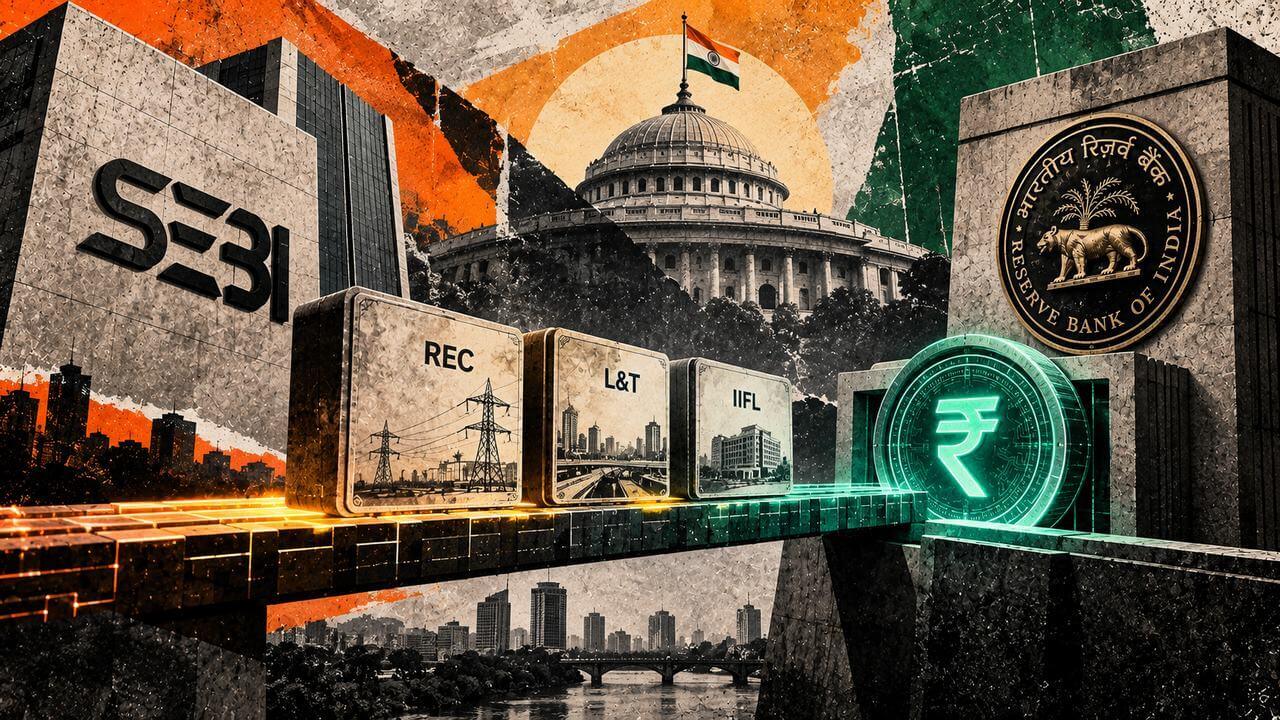
India’s securities regulator has launched a pilot that places corporate bonds and their cash settlement on linked digital rails. The first three issuances moved ₹1,025 crore while preserving the securities’ existing legal and economic terms.
Stage I: Institutional Issuances
On September 7 and 9, three companies completed tokenized bond issues:
- REC Limited – ₹500 crore
- L&T Limited – ₹500 crore
- IIFL – ₹25 crore
The bonds were issued as native digital tokens on a private, permissioned distributed ledger, and payment was made using the Reserve Bank of India’s wholesale digital rupee.
Atomic Delivery‑Versus‑Payment
SEBI’s technical FAQ describes a linked settlement where the bond token and cash settle together, or not at all. This removes the risk of one‑sided delivery during the transaction.
Legal and Custody Framework
The token represents the bond itself, retaining the same ISIN, coupon, maturity, covenants, rating and regulatory treatment as a conventional dematerialised bond. Ownership records remain with India’s depositories, which also manage private keys, preserving an intermediated custody model.
Future Stages
Stage II will introduce tokenized secondary‑market trading and retail participation. Until then, investors can transfer bonds peer‑to‑peer or demat‑to‑demat through depositories, with payment settled via the digital rupee or traditional banking channels.
Key Test for Stage II
The next phase will assess whether the architecture can support routine liquidity and a broader investor base after issuance.
Source & attribution
News Source
- Publisher
- CryptoSlate
- Original date
- September 14, 2026, 6:50 PM
- Original headline
- India’s tokenized bond pilot starts with institutions, with retail access planned next