Sustainable On-Chain Yield: Where It Comes From and What It Costs
Original title: The Search for Sustainable On-Chain Yield
Watch on YouTube Opens on youtube.com in a new tab. Playback here uses youtube-nocookie.com.
Summary
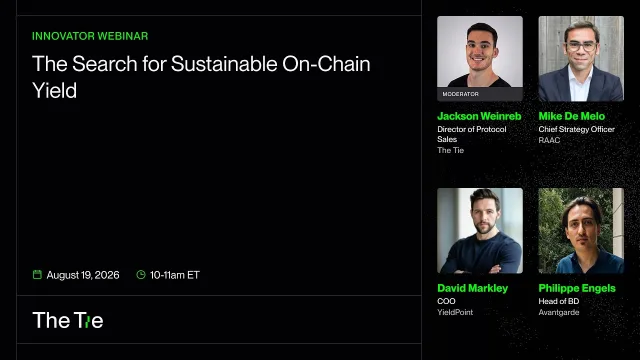
Sustainable on-chain yield is the focus. Where does on-chain yield actually come from? How much of it survives once incentives stop? These are the central questions. Yield product operators David Markley from YieldPoint, Mike De Melo from RAAC, and Philippe Engels from Avantgarde Finance address them. Jackson Weinreb from The Tie moderates. Who actually pays the yield is a key question. What a return looks like after fees is another. Hedging and execution costs are also considered. What has to be in place before institutions allocate at scale is another topic. The search is for yield that lasts beyond incentives. The net return after costs is a key part. Institutional allocation at scale is another. The questions are about sustainability. They are about who pays. They are about what remains after costs. They are about what institutions need. The questions remain open. The search for sustainable yield continues. The focus is on real sources. The focus is on net returns. The focus is on institutional conditions.
This AI summary uses the title, description and tags. It may miss context from the full video. How summaries are checked
Key points
- Where on-chain yield actually comes from is a central question.
- How much on-chain yield survives once incentives stop is a central question.
- Yield product operators David Markley from YieldPoint, Mike De Melo from RAAC, and Philippe Engels from Avantgarde Finance address these questions.
- Jackson Weinreb from The Tie moderates.
- The topics covered include who actually pays the yield, what a return looks like after fees, and hedging and execution costs.
- The topics covered also include what has to be in place before institutions allocate at scale.
A video appearing here is not an endorsement. Crypto assets can lose value. This page provides information, not investment advice.