


Crypto at the intersection of finance and security threats
Original title: Crypto at the intersection of finance and security | Organised crime, sanctions evasion, sabotage
 A7A5
−4.9%
A7A5
−4.9%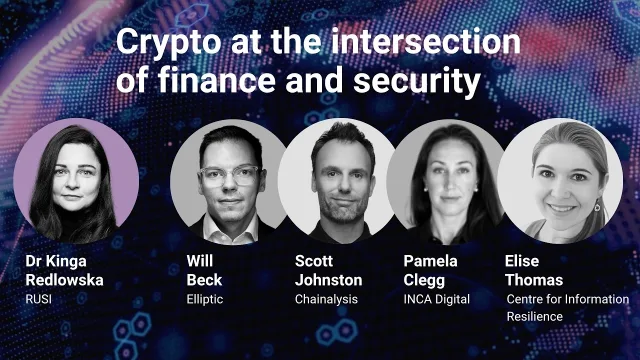
Watch on YouTube Opens on youtube.com in a new tab. Playback here uses youtube-nocookie.com.
Summary
At the 10th Global Conference on Criminal Finances and Cryptoassets, a panel examined what crypto activity can reveal about sanctions evasion, sabotage, organised crime and other security threats. The discussion went beyond compliance and regulation. It treated crypto as part of a wider security picture that includes political interference and organised crime. Speakers said small payments can enable serious harm. Investigators should not focus only on large transactions. They should examine the networks and activities behind payments. Blockchain data becomes more useful intelligence when it is combined with open-source research, digital footprints and other investigative sources. Cases involving A7, A7A5 and TGR were used to show how networks combine crypto and traditional finance. These cases also show how such networks exploit gaps between jurisdictions. Effective responses require trained investigators, intelligence sharing across public and private sectors, and the integration of crypto into mainstream financial investigations. Sanctions can support freezing and disruption, especially when combined with asset seizures and action against enabling platforms. The central challenge is turning intelligence into timely action to disrupt networks, recover assets and protect communities. The conference took place on 15–16 September 2026 at the European Convention Center Luxembourg. It was jointly organised by Europol, UNODC and the Basel Institute on Governance and hosted by Luxembourg’s Bureau de gestion des avoirs.
This AI summary uses the title, description and tags. It may miss context from the full video. How summaries are checked
Key points
- The panel explored what crypto activity can reveal about sanctions evasion, sabotage, organised crime and other security threats.
- Small payments can enable serious harm, so investigators should look beyond large transactions to the networks and activities behind them.
- Blockchain data becomes more useful intelligence when combined with open-source research, digital footprints and other investigative sources.
- Cases involving A7, A7A5 and TGR illustrate how networks combine crypto and traditional finance and exploit gaps between jurisdictions.
- Effective responses require trained investigators, intelligence sharing across public and private sectors, and integration of crypto into mainstream financial investigations.
- Sanctions can support freezing and disruption, particularly when combined with asset seizures and action against enabling platforms.
Questions
What did the panel say about small payments?
It said small payments can enable serious harm, so investigators should look beyond large transactions to the networks and activities behind them.
Which cases were cited as examples?
Cases involving A7, A7A5 and TGR were cited to show how networks combine crypto and traditional finance and exploit gaps between jurisdictions.
What can support freezing and disruption?
Sanctions can support freezing and disruption, particularly when combined with asset seizures and action against enabling platforms.
Related briefs

Chainalysis AI cuts $387M Bitget hack tracing to under 10 minutes
Chainalysis said its in-house AI reduced more than 20 hours of manual bridge reconciliation to under 10 minutes while investigating the $387 million Bitget hack.
5 sources
Regulation
Neutral
Judge lets Celsius $3.3 billion audit claim against Chainalysis proceed
Original reports available. Automatic summary unavailable.
1 source
A video appearing here is not an endorsement. Crypto assets can lose value. This page provides information, not investment advice.