


Bitcoin Code, AI Risk And The Clarity Act Legal Battles
Original title: They Don't Want To Ban Bitcoin Or AI. Just The Kind You Control | Zack Shapiro
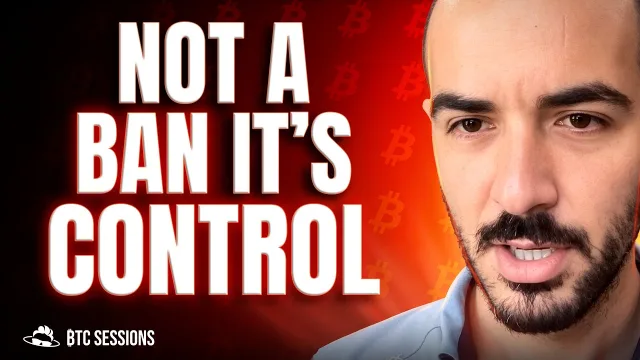
Watch on YouTube Opens on youtube.com in a new tab. Playback here uses youtube-nocookie.com.
Summary
The Clarity Act failed on the Senate floor. The fight over whether writing Bitcoin code can be treated as a crime is heading to 70-year-old federal judges. Zack Shapiro examines what that means for self-custody, open source software, and the Samurai Wallet developers still behind bars. He separates AI existential risk from ordinary AI risks. The existential side includes recursive self-improvement, the orthogonality thesis, and instrumental convergence. The ordinary side includes job displacement, regulatory capture by frontier labs, and cyber attacks like the Cold Card hack. Shapiro argues open source AI is not the existential threat. He says the Blockchain Regulatory Certainty Act (BRCA) matters more than most Bitcoiners realize. He also describes the 'two clocks' of AI capability versus enterprise adoption as defining the next decade. The discussion covers the legal reality behind white hat recovery of hacked Bitcoin, why the liquid hacker is in a bad spot, and what happened when the Clarity Act died. It also covers money transmitter law and the Samurai case, Tornado Cash and FinCEN, why this could ban using Bitcoin, and BRCA criminal protections and court battles. Senator Lummis stood on principle when the Clarity Act failed.
This AI summary uses the title, description and tags. It may miss context from the full video. How summaries are checked
Key points
- The Clarity Act failed on the Senate floor.
- The question of whether writing Bitcoin code can be treated as a crime is heading to 70-year-old federal judges.
- AI existential risk is separated from ordinary AI risks like job displacement, regulatory capture by frontier labs, and cyber attacks such as the Cold Card hack.
- Open source AI is not the existential threat, per Shapiro.
- The Blockchain Regulatory Certainty Act (BRCA) matters more than most Bitcoiners realize.
- The 'two clocks' of AI capability versus enterprise adoption are described as defining the next decade.
Chapters
Chapters come from the timestamps in the video description.
Questions
What happened to the Clarity Act?
It failed on the Senate floor.
What does the 'two clocks' refer to?
AI capability versus enterprise adoption.
Who stood on principle when the Clarity Act failed?
Senator Lummis.
A video appearing here is not an endorsement. Crypto assets can lose value. This page provides information, not investment advice.